"Quantum consciousness" has become a phrase that does a lot of unearned work. It appears in wellness marketing, in books promising that physics has vindicated the soul, and in dismissals that treat the whole subject as pseudoscience by association. Underneath the noise, though, sits an actual, specific, falsifiable-in-principle scientific proposal, made by a Nobel laureate in physics and an anesthesiologist, which has been argued about in peer-reviewed journals for three decades. It deserves to be stated accurately before it is judged — so let me try to do both.
The claim itself
The theory is called orchestrated objective reduction — Orch OR. It has two authors and, really, two halves. Roger Penrose contributed the physics half: a proposal that the collapse of the quantum wavefunction is not the observer-dependent mystery of textbook lore, nor the illusion the Many-Worlds interpretation makes of it, but a real, objective physical process — one triggered by gravity when a superposition involves a large enough difference in spacetime geometry. Penrose further argued, from considerations about Gödel's incompleteness theorems, that human mathematical understanding cannot be the product of any algorithmic computation, and that this non-computable ingredient must enter physics exactly at these objective collapse events.
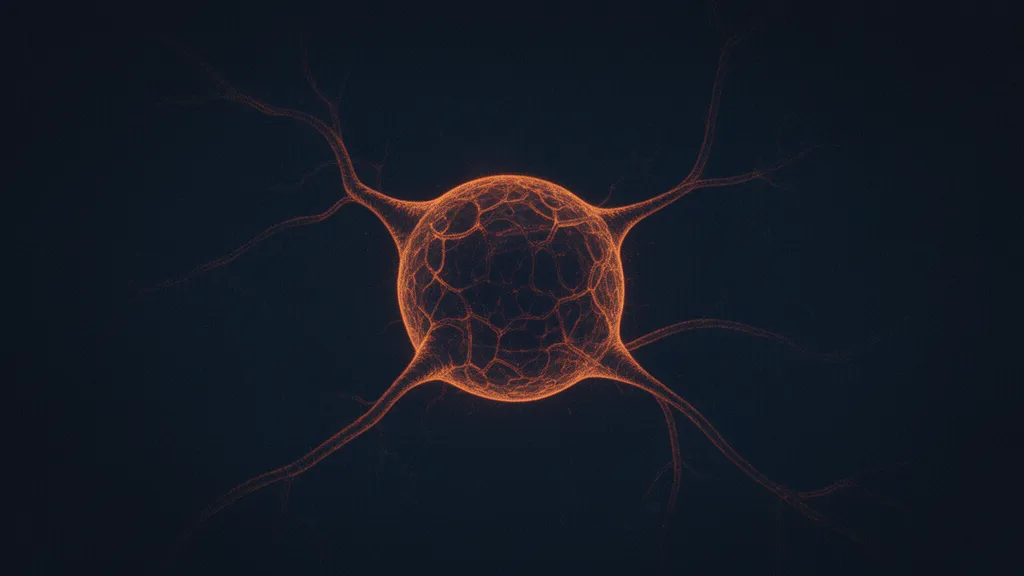
Stuart Hameroff contributed the biology half: a candidate location where such quantum processes could plausibly happen inside a warm brain. His proposal points at microtubules — protein lattices that form the structural skeleton inside every neuron — as structures whose geometry might support quantum coherence, and whose states could be "orchestrated" by the cell before an objective reduction event occurs. Put together: consciousness, on Orch OR, is a sequence of orchestrated quantum-collapse events in the microtubules of the brain's neurons. Each collapse is a discrete moment of proto-experience; trains of them, orchestrated across many neurons, are what a stream of consciousness is.
Why anyone took it seriously
It is worth being clear about what makes this more than numerology. First, it is unusually specific — it names a mechanism, a location, and a timescale, which most theories of consciousness conspicuously avoid. Second, it connects the two deepest open problems in our scientific picture — the measurement problem in quantum mechanics and the hard problem of consciousness — with a single proposed mechanism, and there is an undeniable intellectual elegance in solving two mysteries with one move. Third, its physics author is Roger Penrose, whose track record of being unfashionably right (black hole singularity theorems, twistor theory's revival, the 2020 Nobel Prize) buys the idea a hearing that a lesser name would not get.
Solving two mysteries with one mechanism is elegant. It is also exactly what a mind hungry for meaning would want to be true — which is a reason for care, not dismissal.
The strongest objection: the brain is warm
The canonical criticism arrived in 2000 from the physicist Max Tegmark, and it is quantitative, which is why it stuck. Quantum superpositions are fragile: interaction with a noisy environment destroys them — decoheres them — and a brain is about as noisy an environment as matter offers: warm, wet, and electromagnetically crowded. Tegmark calculated decoherence timescales for neural superpositions on the order of 10-13 to 10-20 seconds, while the timescale of neural firing — anything that could matter to cognition — is 10-3 seconds and up. Ten orders of magnitude is not a gap a theory shrugs off; on Tegmark's numbers, any quantum state in a microtubule is destroyed billions of times faster than the brain could possibly use it.
Hameroff and colleagues replied that the calculation modelled the wrong system — that microtubule interiors, ordered water, and actin gelation could screen coherence far better than Tegmark's assumptions allowed. The honest summary of that exchange, decades later, is that the burden of proof sits with Orch OR: it must show that biology has engineered an exception to a very general physical tendency, and showing that requires experiments, not replies.
What experiments actually show
Two experimental threads keep the theory from being archived. The first is quantum biology generally: it is now textbook physics that at least some warm biological systems exploit quantum effects — the strongest case being photosynthetic energy transfer, with an ongoing debate about how functional the observed coherences really are. That does not vindicate Orch OR, but it did retire the blanket argument that "quantum effects cannot survive in warm biology," which was for years the theory's shortest refutation.
The second thread is direct: experiments on microtubules themselves. The most-cited result comes from Aarat Kalra and colleagues in Greg Scholes's group at Princeton, who reported in ACS Central Science (2023) that laser-induced electronic excitations migrate through microtubules further and persist longer than expected — and that two anesthetics, isoflurane and etomidate, measurably dampened that propagation. A separate 2024 study in eNeuro found that the microtubule-stabilising drug epothilone B delayed anesthetic-induced unconsciousness in rats — again pointing at microtubules as the place where anesthesia acts. These results are suggestive, contested, and small-scale; none of them demonstrates quantum computation in a living brain. What they demonstrate is that the question has moved from armchairs into laboratories, which is more than most theories of consciousness can say. A 2022 review in Frontiers in Molecular Neuroscience by Hameroff himself concedes how much remains unshown while cataloguing what has been — a document as useful for its admissions as for its claims.
Where that leaves the idea
My own reading is deflationary in one direction and generous in another. Deflationary: even if microtubules turned out to host quantum coherence, that alone would tell us nothing about experience — a quantum computer is still a computer, and adding "quantum" to a mechanism does not explain why there is something it is like to be that mechanism. The hard problem does not care what substrate you run on; a gap between physical process and felt experience opens under quantum descriptions exactly as it does under classical ones. Anyone who tells you physics has explained consciousness is selling something.
Generous: Orch OR is one of very few theories that stakes real, empirical claims a laboratory could kill — and theories that can be killed deserve more respect than theories that cannot. If microtubule coherence fails to appear under better instruments, the theory dies honestly. Compare that with positions on panpsychism or functionalism, which no experiment threatens, and Orch OR starts to look less like mysticism and more like the only player at the table who agreed to keep score. Being falsifiable and being right are different things — but only one of them can be checked, and the checking, three decades in, is finally under way.
The observer's role in quantum measurement — the door through which consciousness first walked into physics — is a related but distinct question; we untangle it in The Quantum Observer and Consciousness.